•  
The Jewelry-Making Village - Bangladesh

The Jewelry-Making Village - Bangladesh

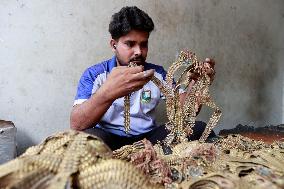
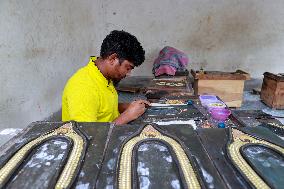
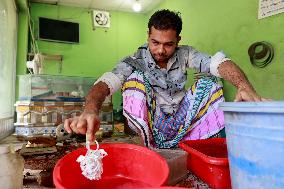
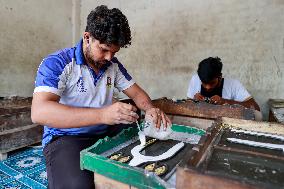
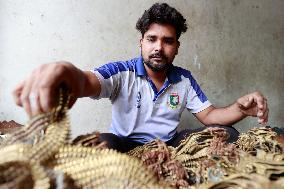
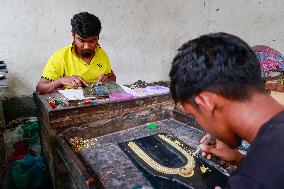
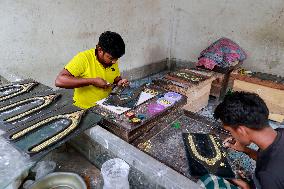
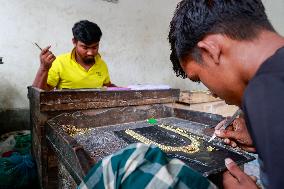
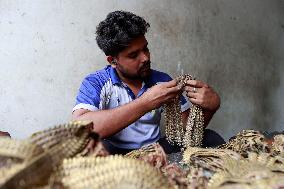
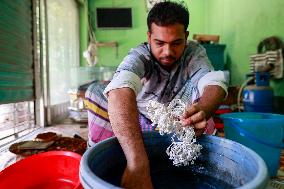
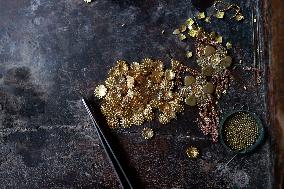
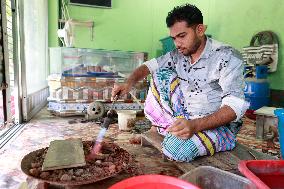
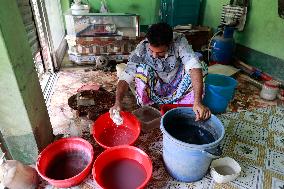
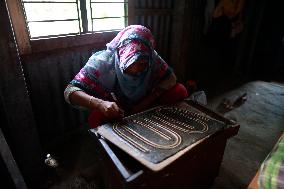
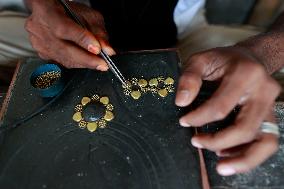
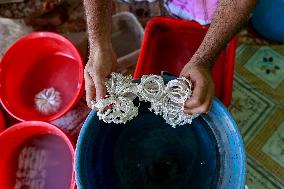
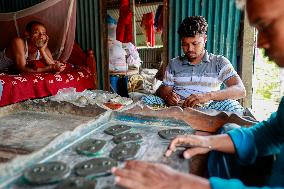
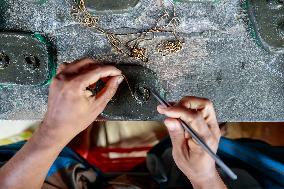
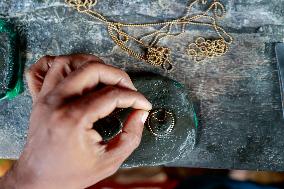
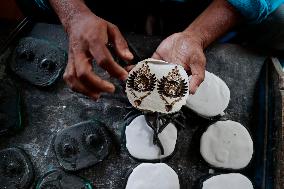
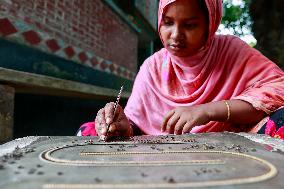
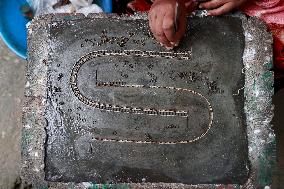
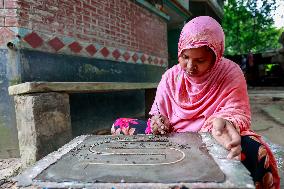
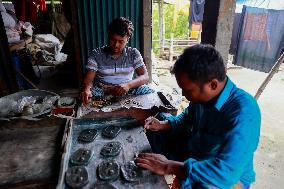
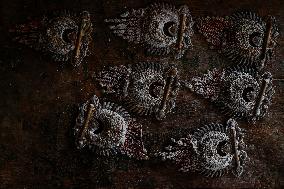
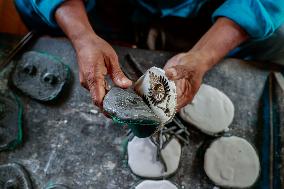
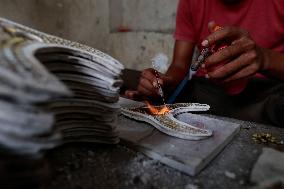
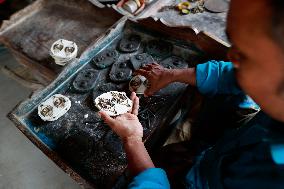
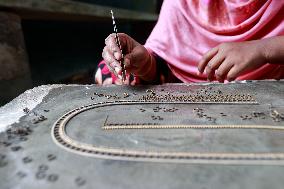
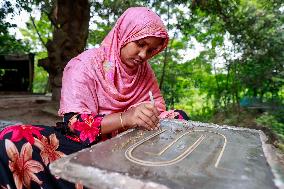
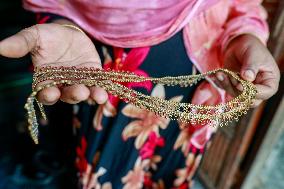
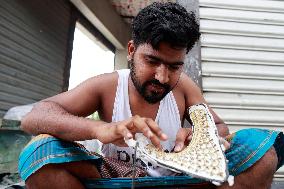
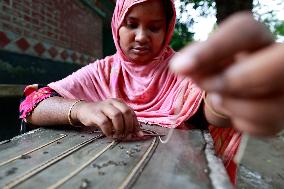
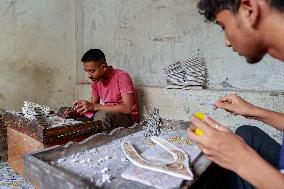
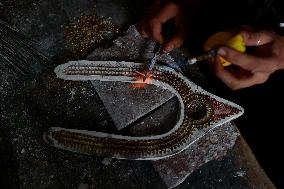
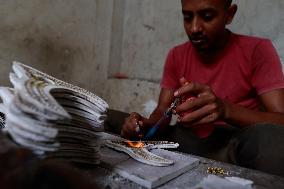
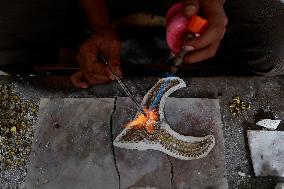
July 3, 2025, Savar, Bangladesh: In Bhakurta Union of Savar, on the outskirts of the capital, jewelry is made in almost every household. Around 10,000 people in the area are involved in the craft. According to locals, the tradition dates back to the British era, when residents adopted jewelry-making as an alternative profession. Initially, they used to craft gold ornaments. Gradually, they shifted to making silver jewelry. Nowadays, most of the ornaments are made from copper and brass. Since the 1980s, the production and sale of jewelry have expanded widely.

  •  
The Jewelry-Making Village - Bangladesh

The Jewelry-Making Village - Bangladesh

July 3, 2025, Savar, Bangladesh: In Bhakurta Union of Savar, on the outskirts of the capital, jewelry is made in almost every household. Around 10,000 people in the area are involved in the craft. According to locals, the tradition dates back to the British era, when residents adopted jewelry-making as an alternative profession. Initially, they used to craft gold ornaments. Gradually, they shifted to making silver jewelry. Nowadays, most of the ornaments are made from copper and brass. Since the 1980s, the production and sale of jewelry have expanded widely.

  •  
The Jewelry-Making Village - Bangladesh

The Jewelry-Making Village - Bangladesh

July 3, 2025, Savar, Bangladesh: In Bhakurta Union of Savar, on the outskirts of the capital, jewelry is made in almost every household. Around 10,000 people in the area are involved in the craft. According to locals, the tradition dates back to the British era, when residents adopted jewelry-making as an alternative profession. Initially, they used to craft gold ornaments. Gradually, they shifted to making silver jewelry. Nowadays, most of the ornaments are made from copper and brass. Since the 1980s, the production and sale of jewelry have expanded widely.

  •  
The Jewelry-Making Village - Bangladesh

The Jewelry-Making Village - Bangladesh

July 3, 2025, Savar, Bangladesh: In Bhakurta Union of Savar, on the outskirts of the capital, jewelry is made in almost every household. Around 10,000 people in the area are involved in the craft. According to locals, the tradition dates back to the British era, when residents adopted jewelry-making as an alternative profession. Initially, they used to craft gold ornaments. Gradually, they shifted to making silver jewelry. Nowadays, most of the ornaments are made from copper and brass. Since the 1980s, the production and sale of jewelry have expanded widely.

  •  
The Jewelry-Making Village - Bangladesh

The Jewelry-Making Village - Bangladesh

July 3, 2025, Savar, Bangladesh: In Bhakurta Union of Savar, on the outskirts of the capital, jewelry is made in almost every household. Around 10,000 people in the area are involved in the craft. According to locals, the tradition dates back to the British era, when residents adopted jewelry-making as an alternative profession. Initially, they used to craft gold ornaments. Gradually, they shifted to making silver jewelry. Nowadays, most of the ornaments are made from copper and brass. Since the 1980s, the production and sale of jewelry have expanded widely.

  •  
The Jewelry-Making Village - Bangladesh

The Jewelry-Making Village - Bangladesh

July 3, 2025, Savar, Bangladesh: In Bhakurta Union of Savar, on the outskirts of the capital, jewelry is made in almost every household. Around 10,000 people in the area are involved in the craft. According to locals, the tradition dates back to the British era, when residents adopted jewelry-making as an alternative profession. Initially, they used to craft gold ornaments. Gradually, they shifted to making silver jewelry. Nowadays, most of the ornaments are made from copper and brass. Since the 1980s, the production and sale of jewelry have expanded widely.

  •  
The Jewelry-Making Village - Bangladesh

The Jewelry-Making Village - Bangladesh

July 3, 2025, Savar, Bangladesh: In Bhakurta Union of Savar, on the outskirts of the capital, jewelry is made in almost every household. Around 10,000 people in the area are involved in the craft. According to locals, the tradition dates back to the British era, when residents adopted jewelry-making as an alternative profession. Initially, they used to craft gold ornaments. Gradually, they shifted to making silver jewelry. Nowadays, most of the ornaments are made from copper and brass. Since the 1980s, the production and sale of jewelry have expanded widely.

  •  
The Jewelry-Making Village - Bangladesh

The Jewelry-Making Village - Bangladesh

July 3, 2025, Savar, Bangladesh: In Bhakurta Union of Savar, on the outskirts of the capital, jewelry is made in almost every household. Around 10,000 people in the area are involved in the craft. According to locals, the tradition dates back to the British era, when residents adopted jewelry-making as an alternative profession. Initially, they used to craft gold ornaments. Gradually, they shifted to making silver jewelry. Nowadays, most of the ornaments are made from copper and brass. Since the 1980s, the production and sale of jewelry have expanded widely.

  •  
The Jewelry-Making Village - Bangladesh

The Jewelry-Making Village - Bangladesh

July 3, 2025, Savar, Bangladesh: In Bhakurta Union of Savar, on the outskirts of the capital, jewelry is made in almost every household. Around 10,000 people in the area are involved in the craft. According to locals, the tradition dates back to the British era, when residents adopted jewelry-making as an alternative profession. Initially, they used to craft gold ornaments. Gradually, they shifted to making silver jewelry. Nowadays, most of the ornaments are made from copper and brass. Since the 1980s, the production and sale of jewelry have expanded widely.

  •  
The Jewelry-Making Village - Bangladesh

The Jewelry-Making Village - Bangladesh

July 3, 2025, Savar, Bangladesh: In Bhakurta Union of Savar, on the outskirts of the capital, jewelry is made in almost every household. Around 10,000 people in the area are involved in the craft. According to locals, the tradition dates back to the British era, when residents adopted jewelry-making as an alternative profession. Initially, they used to craft gold ornaments. Gradually, they shifted to making silver jewelry. Nowadays, most of the ornaments are made from copper and brass. Since the 1980s, the production and sale of jewelry have expanded widely.

  •  
The Jewelry-Making Village - Bangladesh

The Jewelry-Making Village - Bangladesh

July 3, 2025, Savar, Bangladesh: In Bhakurta Union of Savar, on the outskirts of the capital, jewelry is made in almost every household. Around 10,000 people in the area are involved in the craft. According to locals, the tradition dates back to the British era, when residents adopted jewelry-making as an alternative profession. Initially, they used to craft gold ornaments. Gradually, they shifted to making silver jewelry. Nowadays, most of the ornaments are made from copper and brass. Since the 1980s, the production and sale of jewelry have expanded widely.

  •  
The Jewelry-Making Village - Bangladesh

The Jewelry-Making Village - Bangladesh

July 3, 2025, Savar, Bangladesh: In Bhakurta Union of Savar, on the outskirts of the capital, jewelry is made in almost every household. Around 10,000 people in the area are involved in the craft. According to locals, the tradition dates back to the British era, when residents adopted jewelry-making as an alternative profession. Initially, they used to craft gold ornaments. Gradually, they shifted to making silver jewelry. Nowadays, most of the ornaments are made from copper and brass. Since the 1980s, the production and sale of jewelry have expanded widely.

  •  
The Jewelry-Making Village - Bangladesh

The Jewelry-Making Village - Bangladesh

July 3, 2025, Savar, Bangladesh: In Bhakurta Union of Savar, on the outskirts of the capital, jewelry is made in almost every household. Around 10,000 people in the area are involved in the craft. According to locals, the tradition dates back to the British era, when residents adopted jewelry-making as an alternative profession. Initially, they used to craft gold ornaments. Gradually, they shifted to making silver jewelry. Nowadays, most of the ornaments are made from copper and brass. Since the 1980s, the production and sale of jewelry have expanded widely.

  •  
The Jewelry-Making Village - Bangladesh

The Jewelry-Making Village - Bangladesh

July 3, 2025, Savar, Bangladesh: In Bhakurta Union of Savar, on the outskirts of the capital, jewelry is made in almost every household. Around 10,000 people in the area are involved in the craft. According to locals, the tradition dates back to the British era, when residents adopted jewelry-making as an alternative profession. Initially, they used to craft gold ornaments. Gradually, they shifted to making silver jewelry. Nowadays, most of the ornaments are made from copper and brass. Since the 1980s, the production and sale of jewelry have expanded widely.

  •  
The Jewelry-Making Village - Bangladesh

The Jewelry-Making Village - Bangladesh

July 3, 2025, Savar, Bangladesh: In Bhakurta Union of Savar, on the outskirts of the capital, jewelry is made in almost every household. Around 10,000 people in the area are involved in the craft. According to locals, the tradition dates back to the British era, when residents adopted jewelry-making as an alternative profession. Initially, they used to craft gold ornaments. Gradually, they shifted to making silver jewelry. Nowadays, most of the ornaments are made from copper and brass. Since the 1980s, the production and sale of jewelry have expanded widely.

  •  
The Jewelry-Making Village - Bangladesh

The Jewelry-Making Village - Bangladesh

July 3, 2025, Savar, Bangladesh: In Bhakurta Union of Savar, on the outskirts of the capital, jewelry is made in almost every household. Around 10,000 people in the area are involved in the craft. According to locals, the tradition dates back to the British era, when residents adopted jewelry-making as an alternative profession. Initially, they used to craft gold ornaments. Gradually, they shifted to making silver jewelry. Nowadays, most of the ornaments are made from copper and brass. Since the 1980s, the production and sale of jewelry have expanded widely.

  •  
The Jewelry-Making Village - Bangladesh

The Jewelry-Making Village - Bangladesh

July 3, 2025, Savar, Bangladesh: In Bhakurta Union of Savar, on the outskirts of the capital, jewelry is made in almost every household. Around 10,000 people in the area are involved in the craft. According to locals, the tradition dates back to the British era, when residents adopted jewelry-making as an alternative profession. Initially, they used to craft gold ornaments. Gradually, they shifted to making silver jewelry. Nowadays, most of the ornaments are made from copper and brass. Since the 1980s, the production and sale of jewelry have expanded widely.

  •  
The Jewelry-Making Village - Bangladesh

The Jewelry-Making Village - Bangladesh

July 3, 2025, Savar, Bangladesh: In Bhakurta Union of Savar, on the outskirts of the capital, jewelry is made in almost every household. Around 10,000 people in the area are involved in the craft. According to locals, the tradition dates back to the British era, when residents adopted jewelry-making as an alternative profession. Initially, they used to craft gold ornaments. Gradually, they shifted to making silver jewelry. Nowadays, most of the ornaments are made from copper and brass. Since the 1980s, the production and sale of jewelry have expanded widely.

  •  
The Jewelry-Making Village - Bangladesh

The Jewelry-Making Village - Bangladesh

July 3, 2025, Savar, Bangladesh: In Bhakurta Union of Savar, on the outskirts of the capital, jewelry is made in almost every household. Around 10,000 people in the area are involved in the craft. According to locals, the tradition dates back to the British era, when residents adopted jewelry-making as an alternative profession. Initially, they used to craft gold ornaments. Gradually, they shifted to making silver jewelry. Nowadays, most of the ornaments are made from copper and brass. Since the 1980s, the production and sale of jewelry have expanded widely.

  •  
The Jewelry-Making Village - Bangladesh

The Jewelry-Making Village - Bangladesh

July 3, 2025, Savar, Bangladesh: In Bhakurta Union of Savar, on the outskirts of the capital, jewelry is made in almost every household. Around 10,000 people in the area are involved in the craft. According to locals, the tradition dates back to the British era, when residents adopted jewelry-making as an alternative profession. Initially, they used to craft gold ornaments. Gradually, they shifted to making silver jewelry. Nowadays, most of the ornaments are made from copper and brass. Since the 1980s, the production and sale of jewelry have expanded widely.

  •  
The Jewelry-Making Village - Bangladesh

The Jewelry-Making Village - Bangladesh

July 3, 2025, Savar, Bangladesh: In Bhakurta Union of Savar, on the outskirts of the capital, jewelry is made in almost every household. Around 10,000 people in the area are involved in the craft. According to locals, the tradition dates back to the British era, when residents adopted jewelry-making as an alternative profession. Initially, they used to craft gold ornaments. Gradually, they shifted to making silver jewelry. Nowadays, most of the ornaments are made from copper and brass. Since the 1980s, the production and sale of jewelry have expanded widely.

  •  
The Jewelry-Making Village - Bangladesh

The Jewelry-Making Village - Bangladesh

July 3, 2025, Savar, Bangladesh: In Bhakurta Union of Savar, on the outskirts of the capital, jewelry is made in almost every household. Around 10,000 people in the area are involved in the craft. According to locals, the tradition dates back to the British era, when residents adopted jewelry-making as an alternative profession. Initially, they used to craft gold ornaments. Gradually, they shifted to making silver jewelry. Nowadays, most of the ornaments are made from copper and brass. Since the 1980s, the production and sale of jewelry have expanded widely.

  •  
The Jewelry-Making Village - Bangladesh

The Jewelry-Making Village - Bangladesh

July 3, 2025, Savar, Bangladesh: In Bhakurta Union of Savar, on the outskirts of the capital, jewelry is made in almost every household. Around 10,000 people in the area are involved in the craft. According to locals, the tradition dates back to the British era, when residents adopted jewelry-making as an alternative profession. Initially, they used to craft gold ornaments. Gradually, they shifted to making silver jewelry. Nowadays, most of the ornaments are made from copper and brass. Since the 1980s, the production and sale of jewelry have expanded widely.

  •  
The Jewelry-Making Village - Bangladesh

The Jewelry-Making Village - Bangladesh

July 3, 2025, Savar, Bangladesh: In Bhakurta Union of Savar, on the outskirts of the capital, jewelry is made in almost every household. Around 10,000 people in the area are involved in the craft. According to locals, the tradition dates back to the British era, when residents adopted jewelry-making as an alternative profession. Initially, they used to craft gold ornaments. Gradually, they shifted to making silver jewelry. Nowadays, most of the ornaments are made from copper and brass. Since the 1980s, the production and sale of jewelry have expanded widely.

  •  
The Jewelry-Making Village - Bangladesh

The Jewelry-Making Village - Bangladesh

July 3, 2025, Savar, Bangladesh: In Bhakurta Union of Savar, on the outskirts of the capital, jewelry is made in almost every household. Around 10,000 people in the area are involved in the craft. According to locals, the tradition dates back to the British era, when residents adopted jewelry-making as an alternative profession. Initially, they used to craft gold ornaments. Gradually, they shifted to making silver jewelry. Nowadays, most of the ornaments are made from copper and brass. Since the 1980s, the production and sale of jewelry have expanded widely.

  •  
The Jewelry-Making Village - Bangladesh

The Jewelry-Making Village - Bangladesh

July 3, 2025, Savar, Bangladesh: In Bhakurta Union of Savar, on the outskirts of the capital, jewelry is made in almost every household. Around 10,000 people in the area are involved in the craft. According to locals, the tradition dates back to the British era, when residents adopted jewelry-making as an alternative profession. Initially, they used to craft gold ornaments. Gradually, they shifted to making silver jewelry. Nowadays, most of the ornaments are made from copper and brass. Since the 1980s, the production and sale of jewelry have expanded widely.

  •  
The Jewelry-Making Village - Bangladesh

The Jewelry-Making Village - Bangladesh

July 3, 2025, Savar, Bangladesh: In Bhakurta Union of Savar, on the outskirts of the capital, jewelry is made in almost every household. Around 10,000 people in the area are involved in the craft. According to locals, the tradition dates back to the British era, when residents adopted jewelry-making as an alternative profession. Initially, they used to craft gold ornaments. Gradually, they shifted to making silver jewelry. Nowadays, most of the ornaments are made from copper and brass. Since the 1980s, the production and sale of jewelry have expanded widely.

  •  
The Jewelry-Making Village - Bangladesh

The Jewelry-Making Village - Bangladesh

July 3, 2025, Savar, Bangladesh: In Bhakurta Union of Savar, on the outskirts of the capital, jewelry is made in almost every household. Around 10,000 people in the area are involved in the craft. According to locals, the tradition dates back to the British era, when residents adopted jewelry-making as an alternative profession. Initially, they used to craft gold ornaments. Gradually, they shifted to making silver jewelry. Nowadays, most of the ornaments are made from copper and brass. Since the 1980s, the production and sale of jewelry have expanded widely.

  •  
The Jewelry-Making Village - Bangladesh

The Jewelry-Making Village - Bangladesh

July 3, 2025, Savar, Bangladesh: In Bhakurta Union of Savar, on the outskirts of the capital, jewelry is made in almost every household. Around 10,000 people in the area are involved in the craft. According to locals, the tradition dates back to the British era, when residents adopted jewelry-making as an alternative profession. Initially, they used to craft gold ornaments. Gradually, they shifted to making silver jewelry. Nowadays, most of the ornaments are made from copper and brass. Since the 1980s, the production and sale of jewelry have expanded widely.

  •  
The Jewelry-Making Village - Bangladesh

The Jewelry-Making Village - Bangladesh

July 3, 2025, Savar, Bangladesh: In Bhakurta Union of Savar, on the outskirts of the capital, jewelry is made in almost every household. Around 10,000 people in the area are involved in the craft. According to locals, the tradition dates back to the British era, when residents adopted jewelry-making as an alternative profession. Initially, they used to craft gold ornaments. Gradually, they shifted to making silver jewelry. Nowadays, most of the ornaments are made from copper and brass. Since the 1980s, the production and sale of jewelry have expanded widely.

  •  
The Jewelry-Making Village - Bangladesh

The Jewelry-Making Village - Bangladesh

July 3, 2025, Savar, Bangladesh: In Bhakurta Union of Savar, on the outskirts of the capital, jewelry is made in almost every household. Around 10,000 people in the area are involved in the craft. According to locals, the tradition dates back to the British era, when residents adopted jewelry-making as an alternative profession. Initially, they used to craft gold ornaments. Gradually, they shifted to making silver jewelry. Nowadays, most of the ornaments are made from copper and brass. Since the 1980s, the production and sale of jewelry have expanded widely.

  •  
The Jewelry-Making Village - Bangladesh

The Jewelry-Making Village - Bangladesh

July 3, 2025, Savar, Bangladesh: In Bhakurta Union of Savar, on the outskirts of the capital, jewelry is made in almost every household. Around 10,000 people in the area are involved in the craft. According to locals, the tradition dates back to the British era, when residents adopted jewelry-making as an alternative profession. Initially, they used to craft gold ornaments. Gradually, they shifted to making silver jewelry. Nowadays, most of the ornaments are made from copper and brass. Since the 1980s, the production and sale of jewelry have expanded widely.

  •  
The Jewelry-Making Village - Bangladesh

The Jewelry-Making Village - Bangladesh

July 3, 2025, Savar, Bangladesh: In Bhakurta Union of Savar, on the outskirts of the capital, jewelry is made in almost every household. Around 10,000 people in the area are involved in the craft. According to locals, the tradition dates back to the British era, when residents adopted jewelry-making as an alternative profession. Initially, they used to craft gold ornaments. Gradually, they shifted to making silver jewelry. Nowadays, most of the ornaments are made from copper and brass. Since the 1980s, the production and sale of jewelry have expanded widely.

  •  
The Jewelry-Making Village - Bangladesh

The Jewelry-Making Village - Bangladesh

July 3, 2025, Savar, Bangladesh: In Bhakurta Union of Savar, on the outskirts of the capital, jewelry is made in almost every household. Around 10,000 people in the area are involved in the craft. According to locals, the tradition dates back to the British era, when residents adopted jewelry-making as an alternative profession. Initially, they used to craft gold ornaments. Gradually, they shifted to making silver jewelry. Nowadays, most of the ornaments are made from copper and brass. Since the 1980s, the production and sale of jewelry have expanded widely.

  •  
The Jewelry-Making Village - Bangladesh

The Jewelry-Making Village - Bangladesh

July 3, 2025, Savar, Bangladesh: In Bhakurta Union of Savar, on the outskirts of the capital, jewelry is made in almost every household. Around 10,000 people in the area are involved in the craft. According to locals, the tradition dates back to the British era, when residents adopted jewelry-making as an alternative profession. Initially, they used to craft gold ornaments. Gradually, they shifted to making silver jewelry. Nowadays, most of the ornaments are made from copper and brass. Since the 1980s, the production and sale of jewelry have expanded widely.

  •  
The Jewelry-Making Village - Bangladesh

The Jewelry-Making Village - Bangladesh

July 3, 2025, Savar, Bangladesh: In Bhakurta Union of Savar, on the outskirts of the capital, jewelry is made in almost every household. Around 10,000 people in the area are involved in the craft. According to locals, the tradition dates back to the British era, when residents adopted jewelry-making as an alternative profession. Initially, they used to craft gold ornaments. Gradually, they shifted to making silver jewelry. Nowadays, most of the ornaments are made from copper and brass. Since the 1980s, the production and sale of jewelry have expanded widely.

  •  
The Jewelry-Making Village - Bangladesh

The Jewelry-Making Village - Bangladesh

July 3, 2025, Savar, Bangladesh: In Bhakurta Union of Savar, on the outskirts of the capital, jewelry is made in almost every household. Around 10,000 people in the area are involved in the craft. According to locals, the tradition dates back to the British era, when residents adopted jewelry-making as an alternative profession. Initially, they used to craft gold ornaments. Gradually, they shifted to making silver jewelry. Nowadays, most of the ornaments are made from copper and brass. Since the 1980s, the production and sale of jewelry have expanded widely.

  •  
Events In Support Of Hamas Victims - Madrid

Events In Support Of Hamas Victims - Madrid

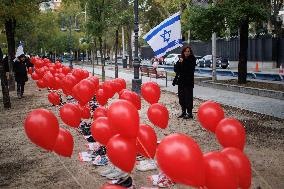
A woman with an Israeli flag in front of a display of red balloons with shoes and dolls with pictures of children kidnapped by Hamas, in front of the European Parliament, on November 7, 2023, in Madrid, Spain. A month ago, the war between Israel and Hamas has left more than 11,000 dead, almost 10,000 in Gaza and 1,400 Israelis, since the Hamas attack on October 7. In addition to the deaths, there has been a lack of basic supplies in the Gaza Strip since then and, as a consequence, the flight of around 1.5 million internally displaced persons in the Strip and 200,000 in Israel. Photo by Alejandro Martínez Vélez / Europa Press/ABACAPRESS.COM

  •  
Empty Table Pro-Israel Protest - Madrid

Empty Table Pro-Israel Protest - Madrid

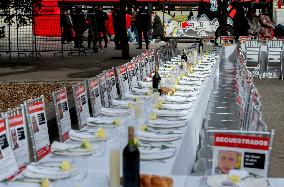
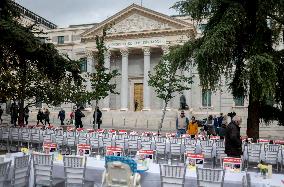
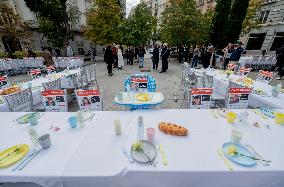
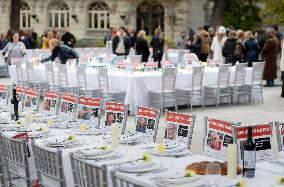
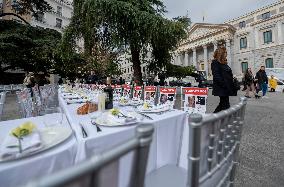
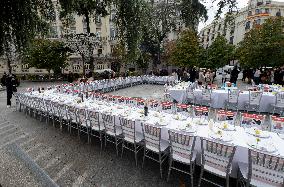
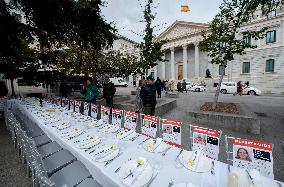
A table with 241 empty chairs to symbolize the wait for the return of the hostages captured by Hamas, in front of the Congress of Deputies, on November 7, 2023, in Madrid (Spain). It has been a month since the war between Israel and Hamas left more than 11,000 dead, almost 10,000 in Gaza and 1,400 Israelis, since the Hamas attack on October 7. In addition to the deaths, there has been a lack of basic supplies in the Gaza Strip since then and, as a consequence, the flight of around 1.5 million internally displaced persons in the Strip and 200,000 in Israel. Photo by Alberto Ortega / Europa Press/ABACAPRESS.COM

  •  
Empty Table Pro-Israel Protest - Madrid

Empty Table Pro-Israel Protest - Madrid

A table with 241 empty chairs to symbolize the wait for the return of the hostages captured by Hamas, in front of the Congress of Deputies, on November 7, 2023, in Madrid (Spain). It has been a month since the war between Israel and Hamas left more than 11,000 dead, almost 10,000 in Gaza and 1,400 Israelis, since the Hamas attack on October 7. In addition to the deaths, there has been a lack of basic supplies in the Gaza Strip since then and, as a consequence, the flight of around 1.5 million internally displaced persons in the Strip and 200,000 in Israel. Photo by Alberto Ortega / Europa Press/ABACAPRESS.COM

  •  
Empty Table Pro-Israel Protest - Madrid

Empty Table Pro-Israel Protest - Madrid

A table with 241 empty chairs to symbolize the wait for the return of the hostages captured by Hamas, in front of the Congress of Deputies, on November 7, 2023, in Madrid (Spain). It has been a month since the war between Israel and Hamas left more than 11,000 dead, almost 10,000 in Gaza and 1,400 Israelis, since the Hamas attack on October 7. In addition to the deaths, there has been a lack of basic supplies in the Gaza Strip since then and, as a consequence, the flight of around 1.5 million internally displaced persons in the Strip and 200,000 in Israel. Photo by Alberto Ortega / Europa Press/ABACAPRESS.COM

  •  
Empty Table Pro-Israel Protest - Madrid

Empty Table Pro-Israel Protest - Madrid

A table with 241 empty chairs to symbolize the wait for the return of the hostages captured by Hamas, in front of the Congress of Deputies, on November 7, 2023, in Madrid (Spain). It has been a month since the war between Israel and Hamas left more than 11,000 dead, almost 10,000 in Gaza and 1,400 Israelis, since the Hamas attack on October 7. In addition to the deaths, there has been a lack of basic supplies in the Gaza Strip since then and, as a consequence, the flight of around 1.5 million internally displaced persons in the Strip and 200,000 in Israel. Photo by Alberto Ortega / Europa Press/ABACAPRESS.COM

  •  
Empty Table Pro-Israel Protest - Madrid

Empty Table Pro-Israel Protest - Madrid

A table with 241 empty chairs to symbolize the wait for the return of the hostages captured by Hamas, in front of the Congress of Deputies, on November 7, 2023, in Madrid (Spain). It has been a month since the war between Israel and Hamas left more than 11,000 dead, almost 10,000 in Gaza and 1,400 Israelis, since the Hamas attack on October 7. In addition to the deaths, there has been a lack of basic supplies in the Gaza Strip since then and, as a consequence, the flight of around 1.5 million internally displaced persons in the Strip and 200,000 in Israel. Photo by Alberto Ortega / Europa Press/ABACAPRESS.COM

  •  
Empty Table Pro-Israel Protest - Madrid

Empty Table Pro-Israel Protest - Madrid

A table with 241 empty chairs to symbolize the wait for the return of the hostages captured by Hamas, in front of the Congress of Deputies, on November 7, 2023, in Madrid (Spain). It has been a month since the war between Israel and Hamas left more than 11,000 dead, almost 10,000 in Gaza and 1,400 Israelis, since the Hamas attack on October 7. In addition to the deaths, there has been a lack of basic supplies in the Gaza Strip since then and, as a consequence, the flight of around 1.5 million internally displaced persons in the Strip and 200,000 in Israel. Photo by Alberto Ortega / Europa Press/ABACAPRESS.COM

  •  
Empty Table Pro-Israel Protest - Madrid

Empty Table Pro-Israel Protest - Madrid

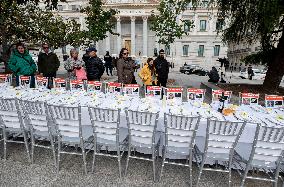
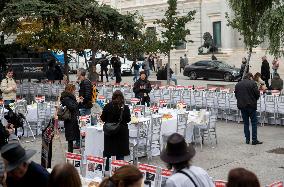
Several people look at the table with 241 empty chairs to symbolize the wait for the return of the hostages captured by Hamas, in front of the Congress of Deputies, on November 7, 2023, in Madrid (Spain). It has been a month since the war between Israel and Hamas left more than 11,000 dead, almost 10,000 in Gaza and 1,400 Israelis, since the Hamas attack on October 7. In addition to the deaths, there has been a lack of basic supplies in the Gaza Strip since then and, as a consequence, the flight of around 1.5 million internally displaced persons in the Strip and 200,000 in Israel. Photo by Alberto Ortega / Europa Press/ABACAPRESS.COM

  •  
Empty Table Pro-Israel Protest - Madrid

Empty Table Pro-Israel Protest - Madrid

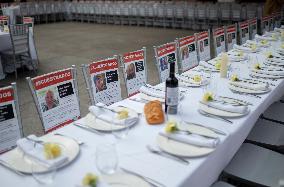
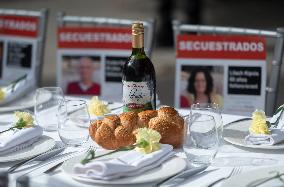
A bottle of wine and bread on a table with 241 empty chairs to symbolize the wait for the return of the hostages captured by Hamas, in front of the Congress of Deputies, November 7, 2023, in Madrid (Spain). It has been a month since the war between Israel and Hamas left more than 11,000 dead, almost 10,000 in Gaza and 1,400 Israelis, since the Hamas attack on October 7. In addition to the deaths, there has been a lack of basic supplies in the Gaza Strip since then and, as a consequence, the flight of around 1.5 million internally displaced persons in the Strip and 200,000 in Israel. Photo by Alberto Ortega / Europa Press/ABACAPRESS.COM

  •  
Empty Table Pro-Israel Protest - Madrid

Empty Table Pro-Israel Protest - Madrid

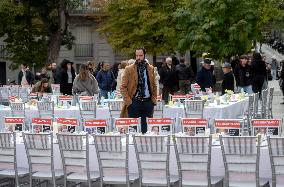
A man looks at the table with 241 empty chairs to symbolize the wait for the return of the hostages captured by Hamas, in front of the Congress of Deputies, on November 7, 2023, in Madrid (Spain). It has been a month since the war between Israel and Hamas left more than 11,000 dead, almost 10,000 in Gaza and 1,400 Israelis, since the Hamas attack on October 7. In addition to the deaths, there has been a lack of basic supplies in the Gaza Strip since then and, as a consequence, the flight of around 1.5 million internally displaced persons in the Strip and 200,000 in Israel. Photo by Alberto Ortega / Europa Press/ABACAPRESS.COM

  •  
Empty Table Pro-Israel Protest - Madrid

Empty Table Pro-Israel Protest - Madrid

Several people look at the table with 241 empty chairs to symbolize the wait for the return of the hostages captured by Hamas, in front of the Congress of Deputies, on November 7, 2023, in Madrid (Spain). It has been a month since the war between Israel and Hamas left more than 11,000 dead, almost 10,000 in Gaza and 1,400 Israelis, since the Hamas attack on October 7. In addition to the deaths, there has been a lack of basic supplies in the Gaza Strip since then and, as a consequence, the flight of around 1.5 million internally displaced persons in the Strip and 200,000 in Israel. Photo by Alberto Ortega / Europa Press/ABACAPRESS.COM

  •  
Empty Table Pro-Israel Protest - Madrid

Empty Table Pro-Israel Protest - Madrid

A table with 241 empty chairs to symbolize the wait for the return of the hostages captured by Hamas, in front of the Congress of Deputies, on November 7, 2023, in Madrid (Spain). It has been a month since the war between Israel and Hamas left more than 11,000 dead, almost 10,000 in Gaza and 1,400 Israelis, since the Hamas attack on October 7. In addition to the deaths, there has been a lack of basic supplies in the Gaza Strip since then and, as a consequence, the flight of around 1.5 million internally displaced persons in the Strip and 200,000 in Israel. Photo by Alberto Ortega / Europa Press/ABACAPRESS.COM

  •  
Empty Table Pro-Israel Protest - Madrid

Empty Table Pro-Israel Protest - Madrid

A table with 241 empty chairs to symbolize the wait for the return of the hostages captured by Hamas, in front of the Congress of Deputies, on November 7, 2023, in Madrid (Spain). It has been a month since the war between Israel and Hamas left more than 11,000 dead, almost 10,000 in Gaza and 1,400 Israelis, since the Hamas attack on October 7. In addition to the deaths, there has been a lack of basic supplies in the Gaza Strip since then and, as a consequence, the flight of around 1.5 million internally displaced persons in the Strip and 200,000 in Israel. Photo by Alberto Ortega / Europa Press/ABACAPRESS.COM

  • Main
  • Top
  • Editorial
  • Creative
  • About Us
  • About ILG
  • Terms of use
  • Company
  • BEHIND
  • Price List
  • Single Plan
  • Monthly Plan
  • Services
  • Shooting
  • Rights Clearance
  • Support
  • FAQ
  • How To Buy
  • Contact Us
  • Become a Partner

© KYODO NEWS IMAGES INC

All Rights Reserved.

  • Editorial
  • Olympics
  • News
  • Sports
  • Japan
  • Tech
  • Royal
  • Disaster
  • NorthKorea
  • Old Japan
  • SNS
  • Creative
  • Food
  • Japan
  • Landscape
  • Animal
  • Popular
  • #Ukraine
  • #Russia
  • #coronavirus
  • #N. Korea
  • #Thailand
  • #China
  • #Ukraine
  • #Russia
  • #coronavirus
  • #N. Korea
  • #Thailand
  • #China
  • Food
  • Japan
  • Landscape
  • Animal
  • Olympics
  • News
  • Sports
  • Japan
  • Tech
  • Royal
  • Disaster
  • NorthKorea
  • Old Japan
  • SNS